The key to transporting a wet oil painting is to ensure the frame is not touching any objects and to avoid shaking or violent movement. You can use professional wet painting shipping boxes, DIY foam mats, paper cups, or toothpicks to pad the corners of the frame, canvases stacked front-to-front (with dividers in between), or lightweight wooden crates with painting slots. Before shipping, test for dryness by lightly touching the back of your hand; use a stable, rigid canvas board, keeping the picture face up or upright to avoid heat and humidity. Remember not to wrap the painting in plastic wrap, not to let the wet painting touch any surface directly, and not to place the picture face down.
Understanding the Risks of Shipping Undried Oil Paintings
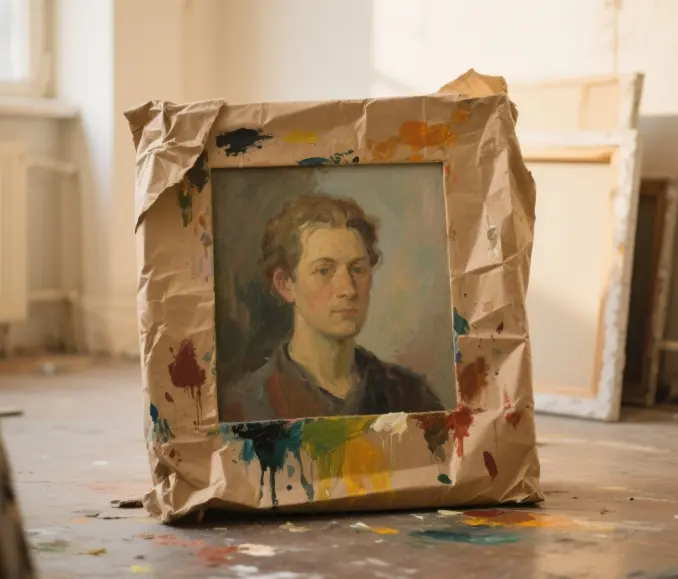
Undried oil paintings are still in the process of curing, as the pigments and oils slowly oxidize and react, rather than relying on water evaporation like acrylics and watercolors. The slightest contact may cause damage:
- Scratches and indentations: The picture may come into contact with packaging or other objects during shipping and handling.
- Sticky or smeared paint: Undried canvases will stick to color if they come into contact with plastic, cardboard, fabric, etc.
- Contamination of the picture: direct contact between two wet paintings will cause cross-contamination of the colors.
- Temperature damage: High temperature (over 30°C) will soften the oil layer and cause it to flow; low temperature (below 5°C) will greatly prolong the drying time.
After finishing the painting, collect the tools and prepare for departure.
First, check how dry the painting is
Gently touch the screen with the back of your hand. If it does not stick or leave marks, the surface is dry and can be transported for short distances. If it is still sticky, it is recommended to add a quick-drying medium (e.g., Alkyd) to the screen to shorten the drying time.
Thickly coated parts can be lightly touched with a toothpick. If there is no obvious sagging, it also indicates that the drying is basically stable. Otherwise, it is best to delay transportation or add a protective cover for raised brush strokes.
Depending on the distance, it is more stable to use a rigid board when traveling a great distance.
- Wooden or linen canvas boards are more stable and less likely to deform during transportation.
- Tension-framed canvas tends to bounce, especially if the frame is thin, and the oil layer tends to crack.
It is recommended to use a board for long-distance transportation; short-distance transportation of canvas is also feasible, but attention should be paid to strengthening the corners to prevent damage.
How to transport undried oil paintings, our recommended seven ways to transport wet paintings are as follows:
1. Wet painting transportation box (the safest)
Applicable to: Outdoor sketching, professional artists, and those with multiple paintings to transport.
Brands such as Guerrilla Painter and Raymar offer multi-layer groove construction boxes, where the surface of the painting board will not touch anything after insertion. The material is lightweight, waterproof and shock-resistant.
Advantage: Can transport 10-20 wet paintings at a time, suitable for traveling by car or flight.
2. DIY Foam Divider
Required materials: foam board, large head pin, tape, and PET plastic sheet.
- Secure the frames to the corners of the foam board with large pins.
- Use PET to separate multiple pictures to avoid friction.
Low cost, customizable, and suitable for students and personal use.
3. Toothpick or rubber mat corner padding
Suitable for the transportation of 2-3 small paintings:
- Stick toothpicks or rubber pads on the corners of the canvas to create spacing.
- Tie the frame with an elastic cord to prevent it from sliding.
Avoids direct frame-to-frame contact and is easy to operate.
4. Paper cup transportation method (short distance)
Suitable for short-distance transportation at home:
- Cut the paper cups and stick the bottom to the corners of the frame.
- The picture will not directly touch the bottom when placed flat.
Zero-cost and easy to operate, suitable for emergencies.
5. Front-to-front stacking (canvas only)
- Two canvases of the same size are stacked face out with a slightly larger piece of cardboard between them.
- Bundle tightly all around to ensure no slippage.
Suitable for paintings with a flat surface and no thick coating. Not recommended for pictures with obvious texture.
6. Wooden crate transportation (valuable or large size)
Suitable for paintings of high value or large size.
- Create your own or purchase wooden crates with an embedded groove structure.
- Add foam inside to prevent the picture from shaking during transportation.
Suitable for mailing, airplane check-in, and can be used repeatedly.
7. Soft cloth cover + horizontal transportation
- Cover the screen with a cotton or breathable cloth (do not stick to the screen).
- Place it flat on the car seat or trunk, with soft padding around it to prevent slipping.
Suitable for single-frame short-distance transportation, it avoids dust and minor collisions.
Precautions for warm oil paintings during transportation
- Keep the screen facing up or placed vertically to avoid downward pressure on the screen.
- Fixed in the car, it can be secured to the seat with a seatbelt or tucked between stable objects.
- Please pay attention to temperature control; avoid placing it in a closed car in hot weather, and refrain from leaning against the heater in winter.
- Drive steadily and avoid sharp braking or sudden turns that may cause the frame to slide.
Check the position of the frame every 2 hours for long periods of driving.
Undried oil paintings: What to do when you arrive at your destination?
- It must be unpacked and ventilated immediately to dry.
- Keep the painting upright, leaving space for air to circulate.
- It is not recommended to place it against the wall; instead, it should be on an easel or with a support.
If the picture has slight sticky dust, leave it alone for now and clean it with a soft brush when it is thoroughly dry. If there are small defects, repair them with a thin layer when it is dry.
Never do this to an undried oil painting
❌ Wrap the picture in plastic wrap: This will prevent the colors from fading, but it is not breathable.
❌ Stack wet paintings flat: a slight shake may cause scratches on the picture.
❌ Place the picture face down: the paint may sag and flow out of shape.
✅ Key principle: Let the picture hang in the air, away from any contact.
Out sketching or in a hurry to pick up the painting, I recommend some tools and materials to you
Professional tools for transporting undried oil paintings:
- Guerrilla Painter Wet Painting Transportation Box (holds up to 20 paintings)
- Raymar Wet Painting Transportation Box (adjustable size, sturdy)
Undried Oil Painting Transportation DIY Materials List:
1-inch foam board, PET dividers
Disposable paper cups, tape, flexible foam, balsa wood, zip ties, etc.
Transporting undried oil paintings is actually quite simple; you need to master a few key points: let the picture hang, fix the frame well, and control the ambient temperature. With these steps, transporting wet oil paintings will also be simple. Whether you want to send the painting to an exhibition, deliver it to a client, or bring it to an to an outdoor sketching sesion orsession and a studio, you need to prepare in advance and follow the steps, which will ensure that the work arrives in good condition at the end of the line. One more word: Transporting wet paintings is about stability, not speed.