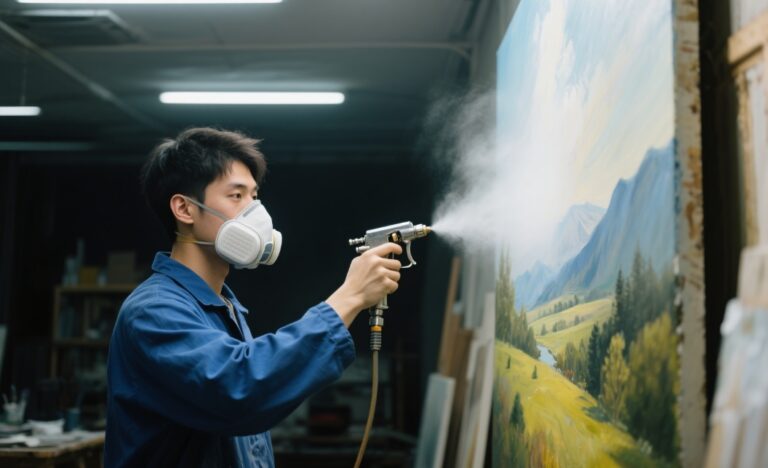
Impressionist painting, the artistic revolution that originated in France in the 19th century, not only fundamentally transformed how we perceive the world and art, but its influence continues to this day, laying the foundation for the development of modern art. Its enduring legacy is not merely due to its depictions of water lilies, balls, or train stations, but because it pioneered a entirely new “painting language”—a unique set of techniques aimed at capturing the fleeting play of light and shadow and the vitality of modern life. This transformation did not occur in isolation but was closely tied to the urbanization and rise of the bourgeoisie in France during the latter half of the 19th century. The emerging middle class sought art that reflected their own lives, replacing the aristocratic preference for mythological and historical themes. This article will take you deep into The 7 Revolutionary Techniques of Impressionist Painting , providing a comprehensive analysis of these groundbreaking techniques that reshaped art history, from theory to practice, and exploring their enduring legacy.

Why did the Impressionists innovate their techniques? Understanding the core ideas behind their work
Before the emergence of Impressionism, the Western art world was dominated by the rigorous academic style. Artists primarily worked indoors, with their works often depicting mythological, historical, or portrait subjects, aimin
g for smooth textures, rigorous compositions, and moral allegories. A turning point occurred in 1874 when a group of artists rejected by the official salon held their first exhibition in Paris, titled “The Society of Painters, Sculptors, Printmakers, and Other Artists.” This exhibition is now regarded as the birth of Impressionism.
Impressionist painters took the opposite approach. Inspired by the developments in optical and color theory at the time, their goal was to faithfully capture the fleeting impressions of vision. They discovered that outdoors, light and color change every moment, and traditional slow, meticulous painting techniques simply could not capture this vitality. Therefore, they developed a rapid, vivid, and scientifically rational technique system, all with one core objective: to recreate the effect of “light” on the canvas rather than depict the inherent form of objects. It is important to note that the ‘unfinished’ quality of their paintings is not a technical flaw but a deliberate aesthetic choice, aiming to affirm that the visual “impression” itself is a complete artistic expression.
The Scientific Principles of Color and Light: The Theoretical Foundation of Impressionism
In the revolutionary wave of Impressionism, a scientific understanding of light and color served as the core driving force behind all painting techniques. Artists systematically employed complementary colors and warm-cool contrasts to enhance the brightness and vitality of their compositions. Their work was grounded in an observational approach to light and color: they recognized that shadows are not devoid of light but rather filled with reflected light and ambient color, and that the colors of objects change with shifts in light and the influence of their surroundings. This philosophy required artists to adopt a new way of thinking: no longer asking, “What color is this?” but rather, “What color does it appear to be in this moment as I see it?”
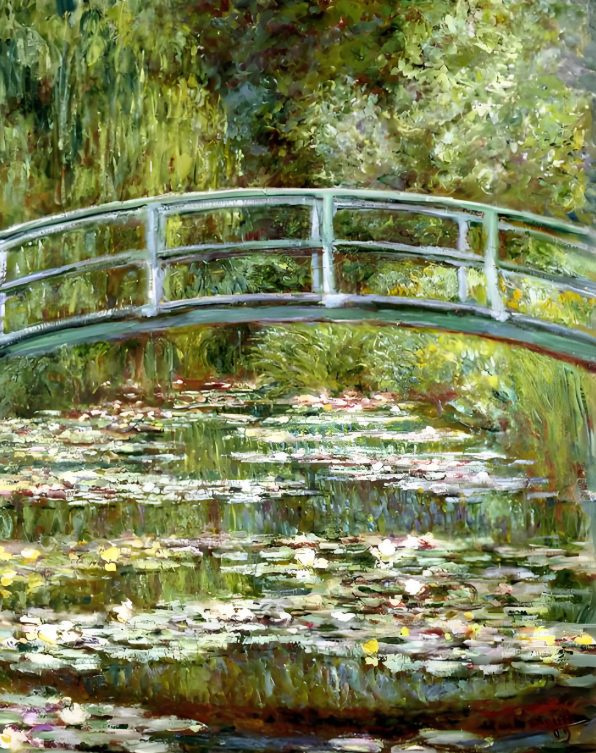
6 Key Impressionist Painting Techniques Explained
1. Broken and Rapid Brushstrokes
What is it?
This is the most obvious characteristic of Impressionism. Artists replaced traditional smooth and soft blending with short, clearly visible, broken brushstrokes (Broken Brushstrokes) that resemble shorthand symbols. These brushstrokes appear side by side, each retaining its independent color and shape, collectively creating the so-called “broken color” effect.
Why?
This technique greatly enhances the vitality of the painting, perfectly capturing the effect of light dancing and flickering on the surface of objects. It simulates the visual experience when we quickly scan a scene—our vision is not smooth but composed of countless visual fragments.
How to do it?
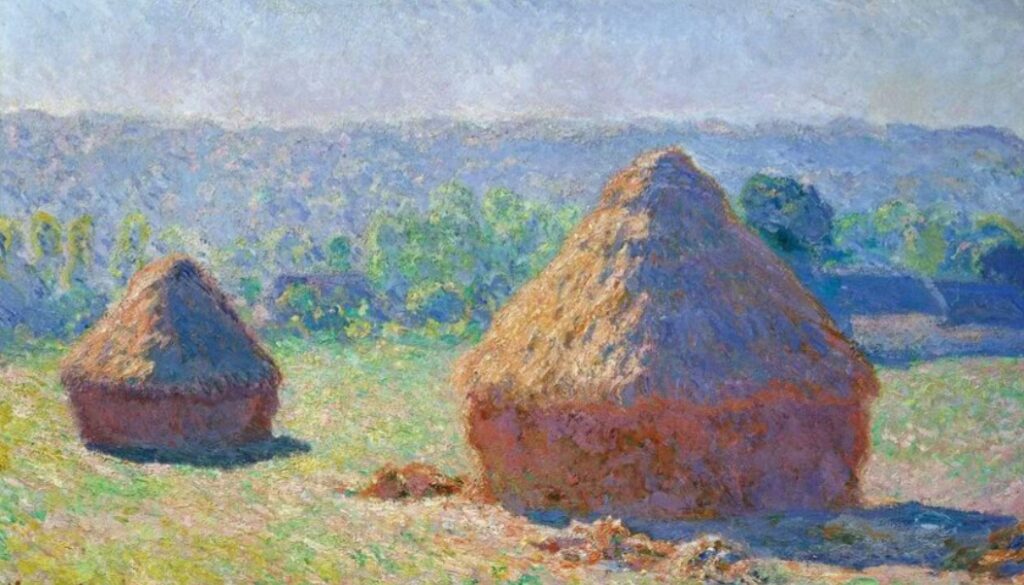
Practical advice: When creating, consciously abandon the idea of “blending evenly.” Let each stroke be clearly visible. Try using brushstrokes in different directions to depict different textures—for example, use horizontal short strokes to paint water surfaces and vertical short strokes to paint grasslands. Observe Monet’s “Haystacks” series to see how he organizes light and color with brushstrokes.
2. Color Theory and Optical Mixing
What is it?
The Impressionists completely revolutionized the use of color. They refused to use pre-mixed grays or blacks to paint shadows, instead discovering that shadows were filled with rich complementary colors. For example, in bright yellow sunlight, shadows would appear in charming shades of purple or blue. By placing pure color dots or small brushstrokes side by side on the canvas, they utilized the principle of simultaneous contrast, causing the viewer’s eyes to automatically blend these colors at a certain viewing distance. This phenomenon is known as optical mixing or visual mixing, and it produces colors that are more vibrant and vivid than those pre-mixed on a palette.
Why?
This is an application of color science. They understood that colors are not isolated but are strongly influenced by ambient light and surrounding colors. Divisionism is the culmination of this concept.
How to do it?
Practical tips: First, try to avoid using tube black paint. When you need to paint shadows, observe it carefully, and you will find it is filled with blue, purple, or deep red. Try placing two pure colors (such as blue and orange) side by side to create a vibrant gray.
3. Embracing Outdoor Sketching
What is it?
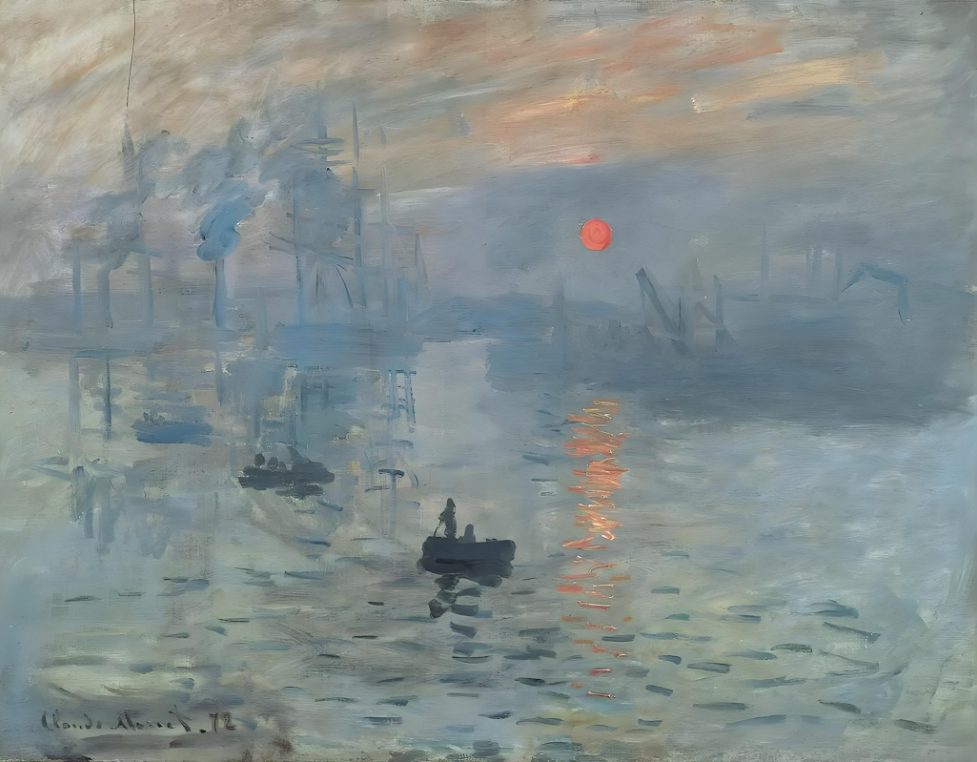
The French name for Impressionism, “Impressionnisme,” comes from Monet’s Impression, Sunrise. This directly points to their core working method: leaving the studio and going outdoors (En Plein Air) to paint nature. The feasibility of this practice was largely made possible by the invention of tube paints around 1841, which freed artists from the cumbersome process of preparing paints and truly granted them the freedom to move.
Why?
This was the most fundamental transformation. Only on-site can one capture the unique light, atmosphere, and colors of a specific moment and weather condition. Any painting completed in the studio from memory cannot possess that authentic “impression.”
How to do it?
Practical advice: Prepare portable painting supplies. You can start with a lightweight easel and a small paintbox. Choose simple scenes and focus on quickly capturing colors and light-dark relationships before the light changes (typically within 2-3 hours), without striving for perfect details.
4. Softening edges and ignoring lines
What is it?
Under strong natural light, the contours of objects often become blurred or even disappear. Impressionist painters therefore abandoned the traditional method of using clear lines to outline shapes, instead relying on contrasts in color and brightness to suggest shapes and create a sense of space.
Why?
This better aligns with the human eye’s actual visual experience. Our visual focus is sharp, but the edges beyond the focus are soft. Abandoning lines makes the composition feel like a “visual whole” rather than a “colored sketch.”
How to do it?
Practical advice: Do not start with a detailed sketch using a pencil or charcoal. Begin directly with brushstrokes and color blocks. When you need to make an object appear to be in the foreground or background, achieve this by adjusting the hardness of its edges and the contrast with the background color, rather than outlining it.
5. Using the “wet-on-wet” technique and impasto
What is it?
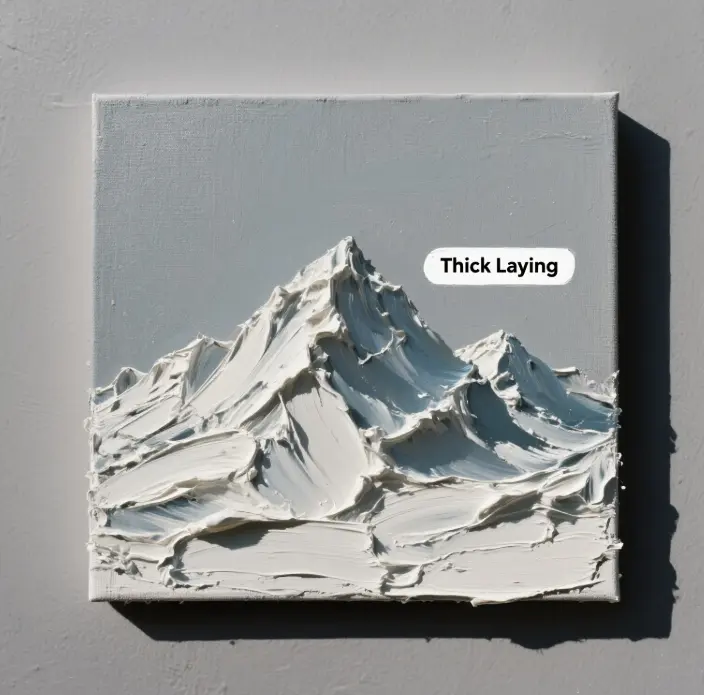
Wet-on-wet is a painting technique in which new paint is applied to the underlying layer while it is still wet. Related to this is impasto, which involves using thick paint to create distinct, textured brushstrokes.
Why?
To adapt to the fast-paced nature of outdoor painting, Impressionist artists needed to speed up their painting process. The Wet-on-Wet technique produces soft, naturally blending colors, making it ideal for depicting clouds, reflections, and a dreamy atmosphere. The Impasto technique, on the other hand, gives the brushstrokes a tangible presence, enhancing the painting’s expressiveness and the texture of light.
How to do it?
Practical tips: When painting with oil or acrylic (acrylic dries quickly, so use a slow-drying medium), boldly add brushstrokes to the wet base color. You will find that the colors blend beautifully. Try using less medium to keep the paint at its natural thickness, building up expressive brushstrokes.
6. Depicting modern life and innovative compositions
What is it?
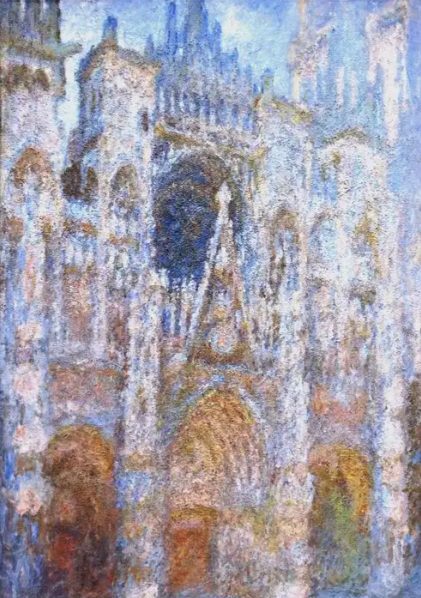
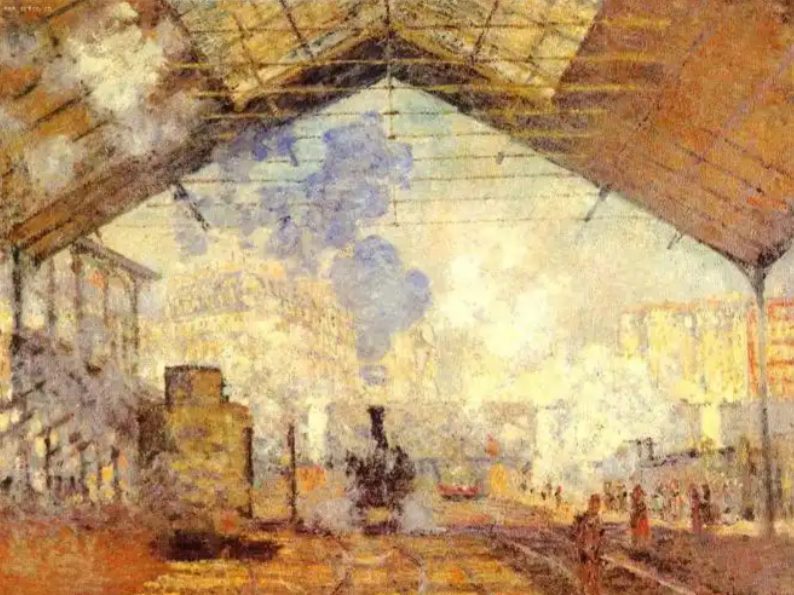
The themes of Impressionism shifted from historical mythology to the modern life surrounding them. Cafés, theaters, boulevards, train stations, and citizens on outings all became the protagonists of their paintings. Their compositions often appeared casual and spontaneous, with figures sometimes cut off at the edges of the canvas. This cropped composition was deeply influenced by the “snapshot” characteristics of photography at the time, while their flattened colors and asymmetry were clearly inspired by Japanese ukiyo-e prints. Impressionist artists also pioneered serialized creation, such as Monet’s “Haystacks” and “Rouen Cathedral” series, systematically studying the changes in the same subject under different lighting conditions, pushing the concept of “capturing the moment” to its extreme.
Why?
Technique serves content. This rapid, moment-capturing brushstroke is inherently suited to depicting the bustling, fluid, and fleeting joy of 19th-century modern urban life. The innovative compositional approach breaks away from traditional Western painting conventions, with photography’s immediacy and ukiyo-e’s visual language reinforcing the painting’s sense of the moment and authenticity, making the viewer feel like an accidental witness to the scene. The series of works reflects the Impressionists’ experimental spirit in scientifically studying light.
How to do it?
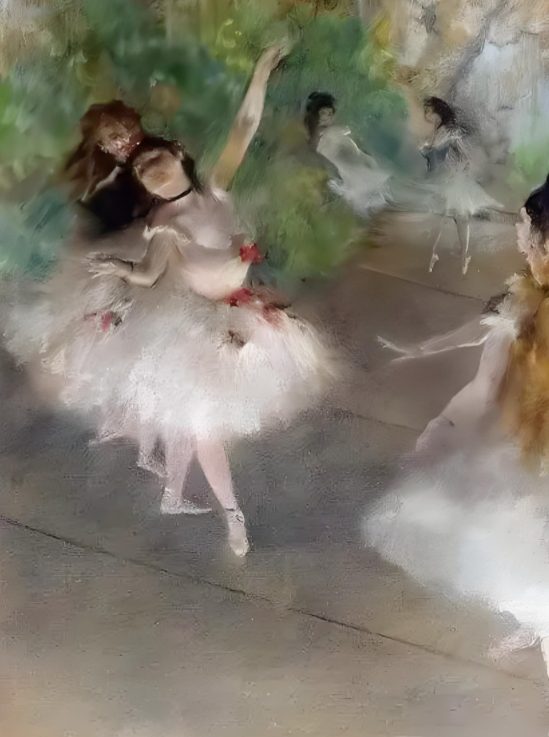
Practical suggestions: When composing a scene, try breaking away from traditional central symmetry, boldly cropping the frame, or observing from an unconventional angle. When selecting subjects, focus on everyday scenes and the fleeting changes in light around you. Examples: Renoir’s ballroom scenes brim with joyful play of light and shadow; Degas’s ballet dancers backstage capture dynamic moments, but it is important to note that while Degas participated in Impressionist exhibitions, he considered himself a realist. He had a strong preference for indoor scenes and artificial lighting (such as stage lights), which contrasts significantly with Monet’s focus on natural light in outdoor sketches; Monet’s Saint-Lazare Station uses color and brushstrokes to depict the atmosphere of steam and industry.
How to start your first Impressionist-style painting?
Now it’s time to put theory into practice! Follow these steps to begin your Impressionist journey:
Choose a simple subject: Don’t start with a complex scene. Choose a still life fruit placed by a window with sunlight shining on it, or a corner of your garden.
Prepare your tools: Prepare your portable painting kit, canvas or board, and oil or acrylic paints. Ensure your palette has a variety of pure colors, and put that tube of black paint away for now.
Observe the light and colors: Take a few minutes to really observe your subject. Where is the light coming from? Where are the brightest and darkest points? What color are the shadows? Are they blue, purple, or warm gray?
Be bold with your brushstrokes: Start with bold color blocks. Use broken brushstrokes, trying to place colors side by side on the canvas rather than fully mixing them on the palette. Remember to ignore lines and use color blocks to shape forms. Work quickly and dare to use thick impasto to capture the texture of the brushstrokes.
Enjoy the process: Don’t aim for photo-perfect precision. Impressionism is about feeling and impression. Enjoy the joy of brushstrokes and colors, and capture your most vivid “impression” of the scene.
Frequently Asked Questions
Q1: Did the Impressionists only use oil paints?
No, although the invention of tube oil paints greatly facilitated the Impressionists’ outdoor sketching, they also widely used other media. Degas is renowned for his exquisite pastel paintings of dancers, and many artists also created watercolors, whose quick and transparent characteristics align perfectly with Impressionist ideals.
Q2: Can Impressionist techniques be used for portraiture?
Absolutely! Renoir’s figure paintings are perfect examples. The key is not to get bogged down in the details of every strand of hair, but to focus on the color changes caused by light on the cheeks (such as pink, yellow, or even light blue), and use flexible brushstrokes to capture the texture of the skin and the vitality of life.
Q3: What is the relationship between Impressionism and Pointillism (Neo-Impressionism)?
Pointillism (as exemplified by Seurat and Signac) can be seen as a scientific offshoot of Impressionist color theory. They pushed optical mixing and divisionist theory to their limits, using only small dots of pure color to paint, seeking greater scientific rigor. Impressionist brushstrokes are more free and expressive, while Pointillist techniques are more rational and systematic.
The legacy of Impressionism extends far beyond the priceless paintings hanging on museum walls. It liberated color, endowed brushstrokes with independent expressive value, and taught us how to observe the light and color that permeate the world through the eyes of an artist. This movement, rooted in the rise of modern cities and the advancement of scientific ideas, was revolutionary not only in technique but also in freeing art from the constraints of academic conventions, allowing it to embrace modern life with passion and ultimately paving the way for numerous modern art movements of the 20th century. These innovative techniques are not distant dogmas but a powerful set of tools waiting for every lover of painting to pick up, experiment with, and integrate into their own creations. Now, pick up your brush and capture your own play of light and shadow, continuing this unceasing revolution of light and color.