The safest way to clean old oil paintings is to use a clean, soft cloth to wipe off the dust gently. Alternatively, you can use olive oil soap and distilled water to wipe gently, avoiding the use of chemical cleaners, water washing, or direct varnish application.
When cleaning old oil paintings, try to avoid hard wiping, using a wet cloth, or applying household cleaners. The most recommended method is to determine whether the picture has been varnished, if the surface has a shiny protective layer, a little wet cotton swab can be dipped in diluted olive oil soapy water and gently rolling clean; if there is no varnish, you should try to use the dry method of cleaning, such as lint-free cloth dusting or fresh white bread gently pressed. During the cleaning process, it is essential to be gentle and avoid rubbing large areas. Additionally, there is no need to varnish immediately after cleaning. In the face of large areas of pollution, discoloration, or peeling, works can be handed over to professional restorers to clean, which is safer.
In this article, we will provide a detailed introduction to judging the state of the picture before cleaning, three types of operable low-risk cleaning methods, common misunderstandings to avoid during cleaning, and strategies for preventing oil paintings from accumulating dust on a daily basis.
Pre-Cleaning: Don’t rush – read these three steps first!
Before you really start to clean an old painting, the first thing to do is not to get cleaning tools, but “judgment” – you must first understand the current state of the painting. Using the wrong cleaning method can lead to color distortion or render the entire painting irreparable. 1.
Has the painting been varnished?
The surface of a varnished painting will have an even layer of reflection (like a mirror gently shining a layer), which can be seen by using an oblique light (such as a desk lamp from the side); or gently rubbed with a clean soft cloth (such as eyeglasses cloth), a varnished painting will not stick pigment on the fabric; an unvarnished painting may have a little light traces of pigment on the fabric (don’t panic, it’s normal).
For varnished paintings, you can use a slightly wet cloth to wipe them, but for unvarnished paintings, you can only use “dry rubbing”; otherwise, the paint layer will be damaged!
Is the work fragile or aged?
If the painting has pigment shedding (small pieces of pigment falling off), cracks (cracks like a turtle shell), warped edges (edges of the canvas rolled up), or looseness (the pigment layer and the canvas are separated, and you can feel the bumps when you touch it with your hands), these situations show that the painting is already fragile. You should definitely not clean it by yourself! Find a professional restorer.
Prepare suitable cleaning materials:
Use lint-free cloths, soft brushes, blow-up balloons, cotton swabs, olive oil soap, distilled water, and fresh bread, among other items.
Tools you should never use: alcohol, detergent, cleaning spray, wet paper towels, and rough towels – these can dissolve the paint, damage the varnish, and even cause the canvas to mold.
Three safe cleaning methods: Before you do it, choose the right way
1. Soft cloth dry wipe method (for floating dust or light soot)
This is the simplest and most conservative cleaning method for paintings with obvious floating dust on the surface but no oil stains.
Steps:
Choose a clean and soft microfiber cloth, lay the fabric flat on your hand, do not fold into the corner (to avoid scratching), follow the direction of the picture brush strokes, gently rub, the action must be light, do not rub back and forth or pressure, encounter pigment thicker areas or edge parts, directly skip or change to soft bristle brush slowly processing.
📌 Applicable circumstances: For the best results, the varnish protective layer of the painting should be applied. If the painting is not varnished, it needs to be handled with more care.
2. Neutral soap and water method (for light oil or smoke stains)
If the picture has accumulated kitchen grease, finger oil, or cigarette smoke stains, you can use a diluted mixture of olive oil, soap and water for spot cleaning.
Steps:
- Mix cleaning solution: Use one tablespoon of olive oil soap and 10 tablespoons of distilled water. Stir to create a light solution, as thin as milk.
- Then use a cotton swab dipped in a bit of cleaning solution, in a small inconspicuous area to test the reaction, if there is no problem, and then roll in one direction (such as from the top to the bottom), do not back and forth rubbing (it will be rubbed away from the oil stains);
- After rubbing, use a clean cotton swab dipped in distilled water and roll it once again to wipe off the residual soap; otherwise, it will leave a white print. Wipe clean, otherwise it will leave a white mark.
- Finally, please wait for the painting to dry naturally; don’t use a hair dryer to blow, as it will cause the canvas to shrink.
📌 Note: Do not use the entire wet wipe or drag it back and forth. Each time the swab is used and replaced in a timely manner to avoid the proliferation of dirt, unpolished works are only recommended for local test use.
3. Breadcrumb adsorption method (for unpolished, light stains)
This is a traditional and “retro” use of the painter, especially for unvarnished, the surface of the more dusty but not serious old oil paintings.
Steps:
- Take a piece of fresh white bread (without crust);
- Knead the bread into a small ball (as big as a marble) and gently press it onto the picture and roll it around (like an eraser); the bread ball will attract dirt, roll it around a few times and then replace it with a new one (don’t roll it around again and again with a dirty bread ball);
- After the operation, use a small brush or a blow-up balloon to sweep away the debris gently.
📌 Advice for use: Avoid using this method on “very greasy places” (such as heavy grease stains in the kitchen), as the bread will stick to the screen and be more difficult to clean.
Wrong cleaning methods and common misconceptions: these “experience practices” do not learn
When cleaning old oil paintings, many people subconsciously adopt household cleaning methods or follow folk remedies, but the result is often to damage the picture permanently. Below is a list of common mistakes and their reasons, reminding you to avoid these pitfalls.
Rub with alcohol and detergent.
Alcohol will dissolve the paint layer of the oil painting (for example, red paint will be wiped off by alcohol and turn white); the chemical ingredients in detergent will damage the varnish layer (making the surface of the painting blurred, like a layer of fog).
Washing with wet paper towels or water
Wet paper towels contain preservatives (such as benzalkonium chloride), which can harm the pigment. If you wash with water, the water will penetrate the canvas, causing it to swell (similar to soaked paper), and the pigment will peel off. Mildew will grow (green hairs on the screen).
Unauthorized varnish to cover the dirty
Some people apply varnish directly in order to make the painting “new” — the result is that the stains are sealed inside (such as gray, grease marks), and there is no way to clean it up later. If the varnish is not well chosen (such as cheap industrial varnish), it will turn yellow (the painting will turn into yellowish-brown, which will be more difficult to look at). (The painting becomes yellowish-brown, making it more difficult to see.)
rubbing hard circles
Many people are accustomed to rubbing things in circles, but the pigment layer of oil paintings is very fragile. Rubbing in circles can cause the pigment to rub off, potentially erasing details (for example, the eyes of the characters on the screen may be wiped out), and can also leave scratches.
Rub with a rough cloth.
For example, with a towel, gauze wipe, these cloth fibers are very thick, will scratch the varnish layer (painting the surface of the fine scratches, like cobwebs), and even scrape off the pigment. IV. When should I leave it to a professional restorer?
When should I leave it to a restoration professional?
Although this article describes a variety of safe cleaning methods that are feasible at home, there are still some oil paintings that are not suitable for self-cleaning and require the intervention of a professional art restorer. Especially for old paintings, masterpieces, works with loose structure or moisture, rash cleaning may cause irreversible damage.
- Blackening and discoloration of the picture, such as the sky, which was originally blue, has now turned gray, and the red flowers have turned brown.
- Oil secretion (sticky oil on the picture, greasy to the touch);
- Cigarette tar (put in a smoking room for a long time, there is a layer of dark brown on the surface, which can’t be wiped off).
- Large-scale peeling and cracking (the layer of pigment is buckled like fish scales, or there are a lot of cracks);
- Perforation of the canvas (e.g., pierced by a a hole pierced by a nail);
- has been placed in a humid place (such as a basement or bathroom), and has traces of mold and insects (green hairs and small holes in the picture).
Where to find a professional restorer? You can contact local art galleries and museums, which often have professional restoration departments, or look online to see if there are any art restoration companies in the area.
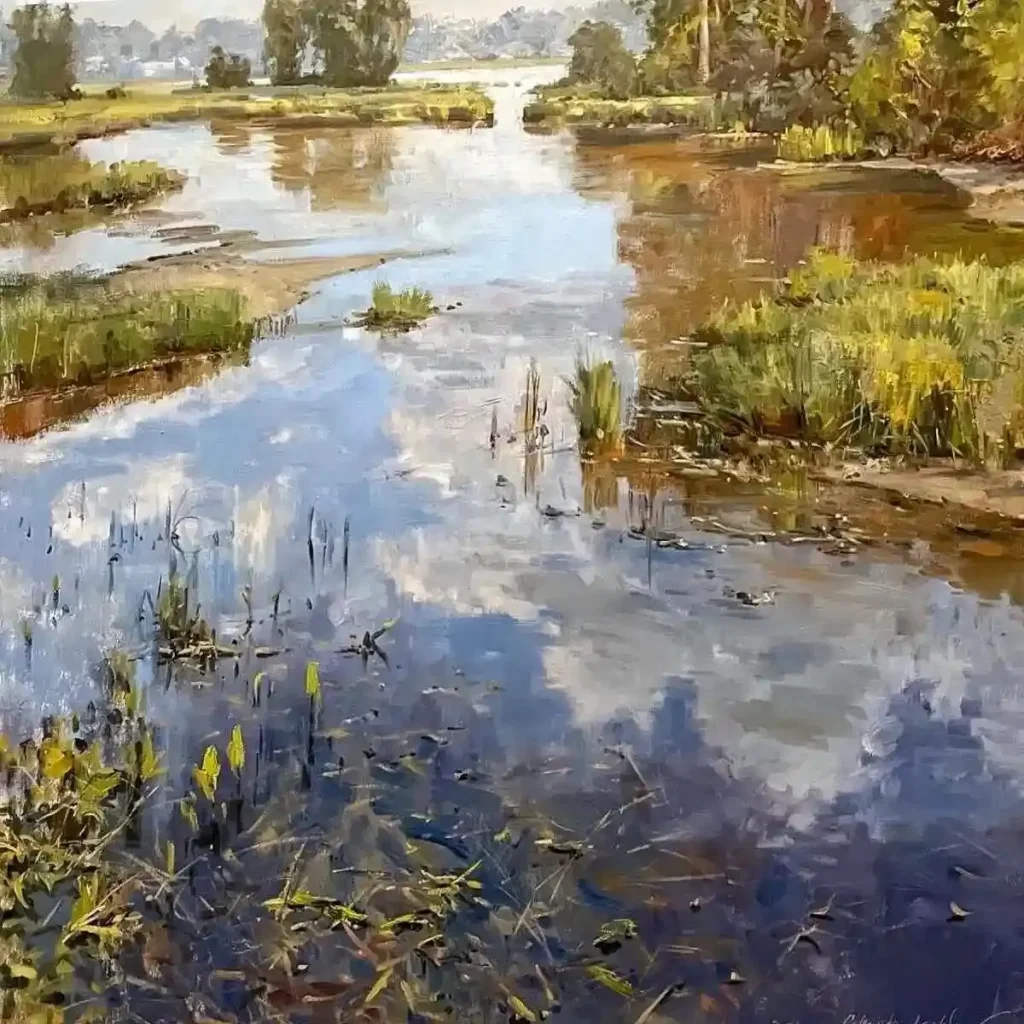
How to prevent oil paintings from getting dirty again? Start with your environment and habits.
Old oil paintings are not suitable for frequent cleaning (clean them every 3-5 years), so it is more crucial to prevent dust accumulation:
- Please put it in the right place: away from the kitchen, smoky places (for example, don’t hang it next to the kitchen, or the oil will float up); away from humid places (for example, bathroom, basement); avoid direct sunlight (or the pigment will fade, for example, the red color will turn into pink); don’t put it under the air conditioner vents (the wind will make the dust stick to it).
- Regular dusting: Use a soft brush (such as a makeup brush) to gently brush the picture (avoid using force), or use a blowing balloon to gently blow away the floating dust (don’t use your mouth to blow).
- Varnish for protection: If the painting has not been varnished, get a professional restorer to put a layer of reversible varnish (that is, varnish that can be removed later) on the painting – that way the next time you clean it, remove the varnish, and it will remove the dirt along with it, without harming the picture.
- Framing: Place a glass frame around the painting (the glass should be UV-protected) to prevent dust from falling directly onto the picture and to protect against humidity.
Old oil paintings carry history, memories and emotions, and they are not like glass or metal that can be just wiped off. Cleaning an oil painting is not as simple as “wiping it clean”, but a task that requires both skill and judgment.

You need to judge whether the polish is suitable for cleaning and then choose the most gentle tools and methods, ranging from dry rubbing to partial wet rubbing and breadcrumb adsorption. Each step should be done carefully and with restraint. And for blackened, peeled and broken images, leaving it to the professionals is the truly responsible thing to do.
When cleaning, don’t rush to “freshen up”; take your time and retain as much of the original look as possible. If you’re not sure, call a professional — after all, some precious things can never come back if they’re ruined.
Lastly, when cleaning an old painting for the first time, try it in the “corners” of the painting (such as the lower right corner of the screen, inconspicuous places) to see if there is any problem with the method, and then use it on a large area — so that even if something goes wrong, it will not ruin the whole painting!