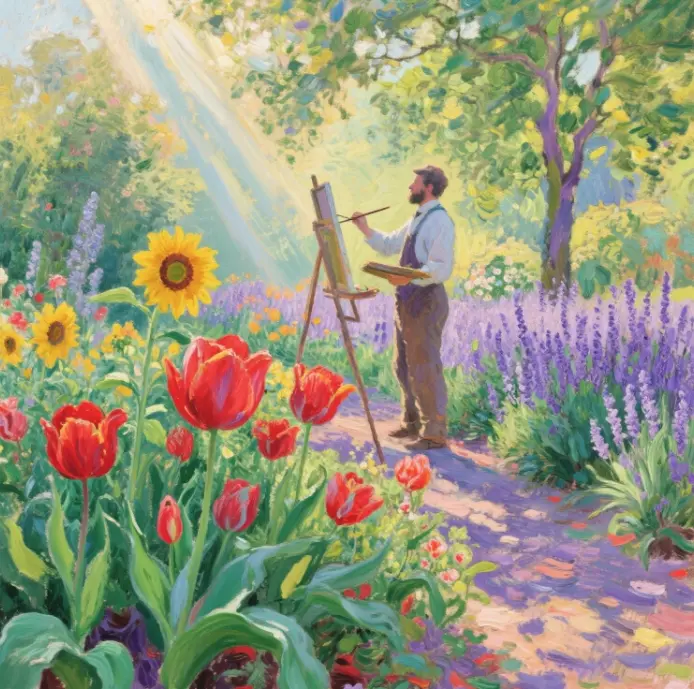
As an important art form, the origin and early development of oil painting have long been a significant topic in art historical research. For a long time, Western art historians have generally regarded the Netherlandish painter Jan van Eyck as the “Father of Oil Painting,” and he is considered the inventor of the oil painting technique. However, recent archaeological discoveries and scientific research have shown that the origins of the method may be much older than van Eyck’s time, and that the path of its dissemination is much more complex than traditionally recognized. In this paper, we will explore the question of “who is the father of oil painting” from multiple perspectives, sorting out the origins, development, and spread of oil painting technology to provide a more comprehensive understanding of this important topic in art history.
Bamiyan murals: the earliest practice of the oil painting technique
Archaeological Discoveries in Bamiyan, Afghanistan
In 2008, a team of Japanese, European, and American scientists discovered the oldest known oil paintings in the world, dating back to the 1st century, in the caves of the Bamiyan Valley in Afghanistan. This significant discovery overturned the previous consensus on the origins of oil painting and advanced the emergence of the technique by approximately 600 years.
The Bamiyan site is situated in the Bamiyan Valley, a renowned “cultural mecca” in Afghanistan and a significant node on the ancient Silk Road. The area was once a center of Buddhist culture, featuring approximately 700 caves, of which around 50 are preserved with wall paintings. By chemically analyzing the composition of the mural paints in the 50 caves at the site, the research team found that paints very close to walnut or pecan oil were used in 12 of the cave murals.
Dating and Technical Characteristics of Bamiyan Frescoes
The Bamiyan frescoes date from the 7th to the 10th centuries A.D., with the main focus on the period from the beginning of the 5th century to the end of the 9th century. Among them, the frescoes in Cave N(a) can be dated to the middle of the 7th century, using horse glue as a base and drying oils (such as walnut, sesame, or perilla oil) as a bonding medium.
Jan van Eyck and the Development of Oil Painting in Europe
Jan van Eyck’s Life and Artistic Achievements
Jan van Eyck (1385-1441) was a Netherlandish painter and one of the greatest painters of the Early Netherlandish School, considered the founder of 15th-century post-Gothic painting in northern Europe and one of the founders of Netherlandish Renaissance art.
Known for his rigorously realistic portraits, van Eyck was one of the first Flanders artists to begin signing his works. His paintings summarize the development of Netherlandish painting up to the 15th century, while simultaneously opening the way to the Netherlandish Renaissance. His work in the first half of the 15th century represented human life and portrayed characters from a new humanist perspective.
Jan van Eyck’s contribution to the technique of oil painting
Jan van Eyck is considered an innovator in oil painting techniques, refining painting methods and inventing oil paints, which were made from oil to be applied to canvas boards, resulting in paintings with more vibrant and long-lasting colors.
Van Eyck mastered the use of pigments and the qualities of vegetable oils to create a naturalistic depiction of reality. He is regarded as the “Father of Oil Painting” for his unique contribution to the development of the art of oil painting.
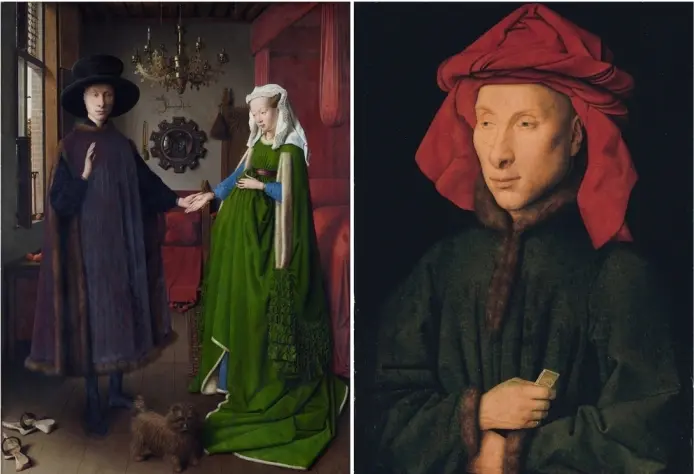
Van Eyck’s innovative development in the use of oil painting elevated his skills to a higher level, and his influence was far-reaching, as his techniques and style were adopted and refined by early Dutch painters. His masterpiece, Portrait of Mr. and Mrs. Arnolfini, is an important work in the history of oil painting.
Jan van Eyck and the Ghent Altarpiece
The Ghent Altarpiece, recognized worldwide as the first true oil painting, was completed by the van Eyck brothers in 1432. Prior to this, the main forms of painting in Europe were wet frescoes and tempera paintings.
The creation of the Ghent Altarpiece is regarded as a breakthrough in oil painting technique, showcasing van Eyck’s skillful mastery and innovation in the medium. This work is not only technically significant but also opened up new possibilities in artistic expression, providing inspiration and reference for later artists.
The Diffusion and Evolution of Oil Painting Techniques
The Path of Diffusion from Bamiyan to Europe
Although the discovery of the Bamiyan frescoes suggests that the oil painting technique existed as early as the 7th century, the question of how the method spread from Asia to Europe remains a topic that needs further investigation. The Silk Road, as a crucial trade and cultural exchange route connecting East and West, may have served as a significant medium for the dissemination of the oil painting technique.
The Silk Road is a major artery for economic and cultural exchanges between Asia, Europe and Africa. During Sino-Western interactions, Chinese tea, porcelain, and the Four Great Inventions spread to Europe, exerting significant influence on Western society at the time. This route may also have facilitated the spread of oil painting techniques.
Central Asia, situated in the heart of the Eurasian continent, was once the central node of the overland Silk Road and remains one of the key areas of the Belt and Road Initiative today. This region may have served as a crucial transit point for the transfer of oil painting techniques from the Middle East to Europe.
The development of oil painting techniques in Europe
During the time of Jan van Eyck, oil painting techniques developed rapidly and were widely adopted in Europe. After van Eyck, oil painting became the main form of painting in Europe, replacing the previous wet frescoes and tempera paintings.
At the beginning of the 15th century, Jan van Eyck, the most important representative of early Northern Renaissance art, expanded the possibilities of rendering the visible world in an unprecedented manner, and was regarded as a great innovator in the art of painting while still alive, with far-reaching consequences in Europe.
During the Renaissance, oil painting techniques continued to evolve and be refined. Artists such as Jan van Eyck are widely regarded as pioneers of the oil painting technique, and their work demonstrated the unique advantages of the medium, including the vibrancy, layering, and transparency of colors.
Who is the Father of Oil Painting?
The clash between traditional views and discoveries
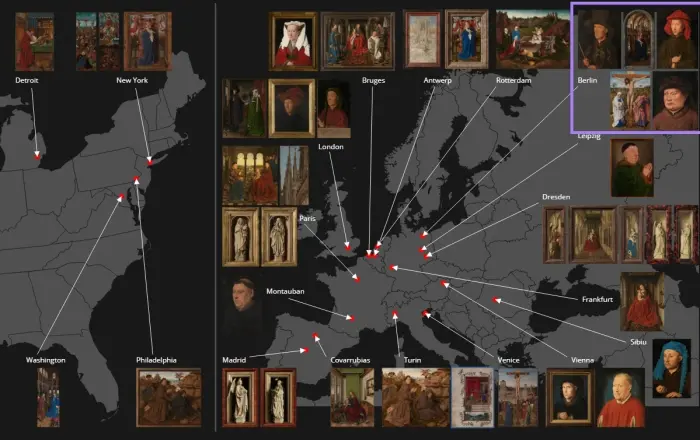
For a long time, Western art historians have generally recognized Jan van Eyck as the “Father of Oil Painting,” considered the inventor of the technique. This view is based on the traditional narrative of European art history, which closely links the development of oil painting techniques to the Netherlandish Renaissance.
However, archaeological discoveries and scientific analyses in Bamiyan, Afghanistan, in 2008 suggest that the origins of the oil painting technique may have been much earlier than the era in which van Eyck lived. This discovery overturned the traditional art historical narrative, pushing the emergence of the oil painting technique forward by approximately 600 years.
The discovery has also sparked scholarly debate on how to redefine the notion of “oil painting” and how to understand the independent development of oil painting techniques in different regions, as well as their mutual influence.
Reassessment of the historical status of Jan van Eyck
Although the discovery of the Bamiyan frescoes suggests that the technique of oil painting existed before van Eyck, Jan van Eyck’s historical place in the development of European oil painting cannot be ignored. He is considered to be the first known painter to use oil paints, and it was from him that the technique of oil painting was adopted on a large scale.
Van Eyck’s innovation lies in his improvement and popularization of the oil painting technique, which led to the widespread acceptance and use of this medium throughout Europe. His work demonstrated the unique advantages of the oil painting technique and provided inspiration and reference for later artists.
The spread and evolution of oil painting techniques reflect the exchange and integration of different cultures. From the Bamiyan frescoes to the oil paintings of the European Renaissance, this art form has undergone numerous cultural transformations and technological innovations.
The Silk Road, as a crucial cultural route connecting East and West, may have played a significant role in the dissemination of oil painting techniques. This route not only facilitated the exchange of goods but also the exchange of art and technology.