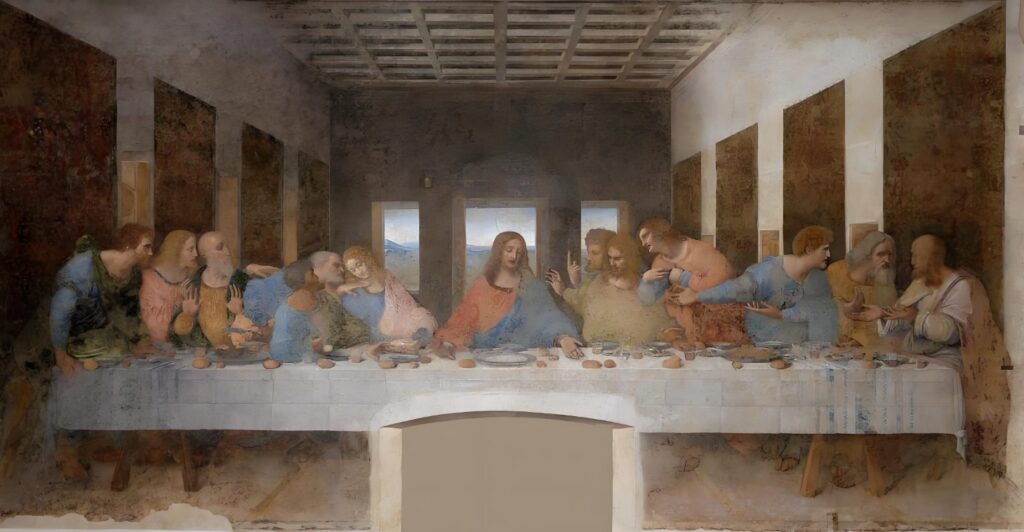
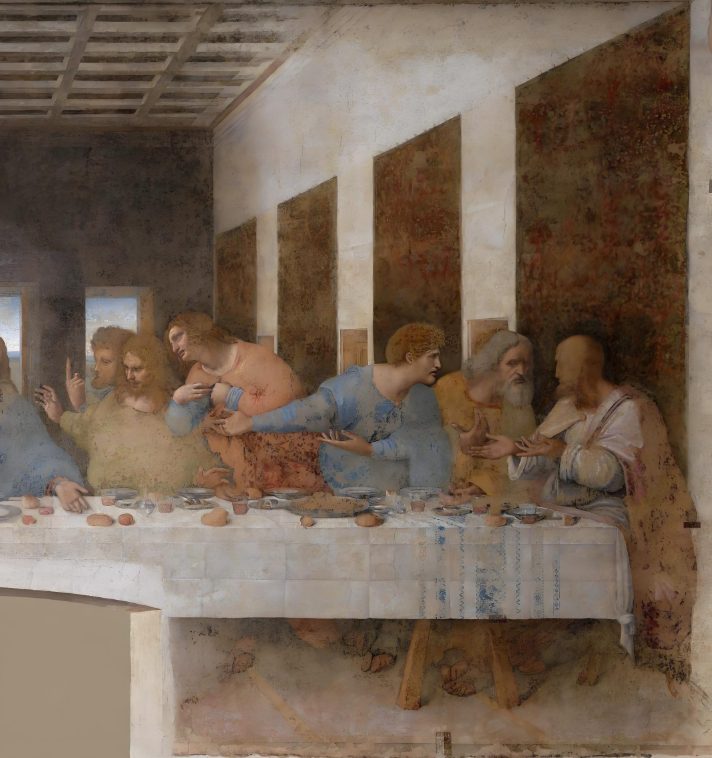
Where is The Last Supper? The answer is—it is located on the north wall of the refectory of the Santa Maria delle Grazie monastery in Milan, Italy. This masterpiece, created by Leonardo da Vinci between 1495 and 1498, is one of the most famous religious artworks in the world and an important part of UNESCO’s World Cultural Heritage.
Unlike most paintings, which are housed in museum frames, this masterpiece is directly painted on the wall, inseparable from the building itself. It attracts countless art enthusiasts and scholars from around the world, and leaves visitors in awe—but to see it in person, you must make thorough travel arrangements in advance.
Where is The Last Supper? — An Overview of the Location of the Mural
The Last Supper is located on the north wall of the refectory of the Dominican monastery within the Church of Santa Maria delle Grazie in the western part of Milan’s city center.
The church was designed by Guiniforte Solari in 1463 in the Lombard Gothic style. By the end of the 15th century, Donato Bramante was commissioned by Milanese Duke Ludovico Sforza to expand the church, adding a grand dome, apse, and cloister. Ludovico also intended the church to serve as the mausoleum for the Sforza family, especially after the death of his wife Beatrice d’Este in 1497. These expansions made it a prime example of the transition from Gothic to Renaissance architecture in Milan.
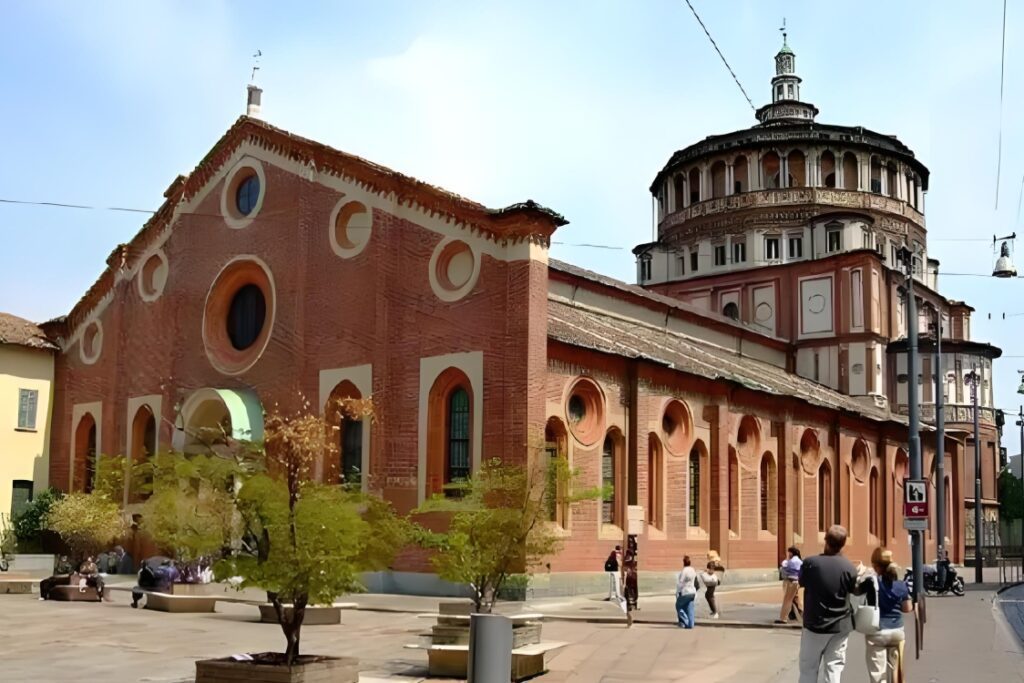
The Church of Santa Maria delle Grazie and the Dominican Convent, along with The Last Supper itself, were collectively inscribed on the UNESCO World Heritage List in 1980. This designation recognized their “outstanding universal value,” particularly based on two criteria: Criterion (I), acknowledging The Last Supper as an “eternal and unique artistic achievement”; and Criterion (II), affirming the work’s profound influence on the development of painting. This not only acknowledges the artistic value of da Vinci’s masterpiece but also emphasizes the significance of the entire complex as a crucial testament to Renaissance art.
Directly opposite the fresco is Giovanni Donato Montorfano’s 1495 fresco “The Crucifixion,” creating a spatial dialogue between religion and art.
Essential Information for Visitors: Tickets and Reservations
If you want to see The Last Supper in person, advance planning is essential. According to the official Milan tourism website and the Museo del Cenacolo Vinciano (Da Vinci’s Last Supper Museum), all visits must be booked in advance online or by phone. Tickets are registered under your real name, and you must present your ID and ticket information upon entry.
Due to the extreme fragility of the fresco, strict visitor numbers and time controls are enforced in the exhibition hall. Each group is limited in size, and each visitor is allotted only 15 minutes for viewing. Arriving on time is therefore crucial—being late may result in missing your scheduled time slot, and no make-up visits are permitted.
Ticket prices are approximately 15 euros for adults, with discounted rates available for students, young people, and certain groups. Prices may vary slightly depending on the season and exhibition period, so it is recommended to check the official website for the latest ticket information before booking to avoid missing your preferred visit date.
The Art and Conservation Context of The Last Supper
Technique and Fragility
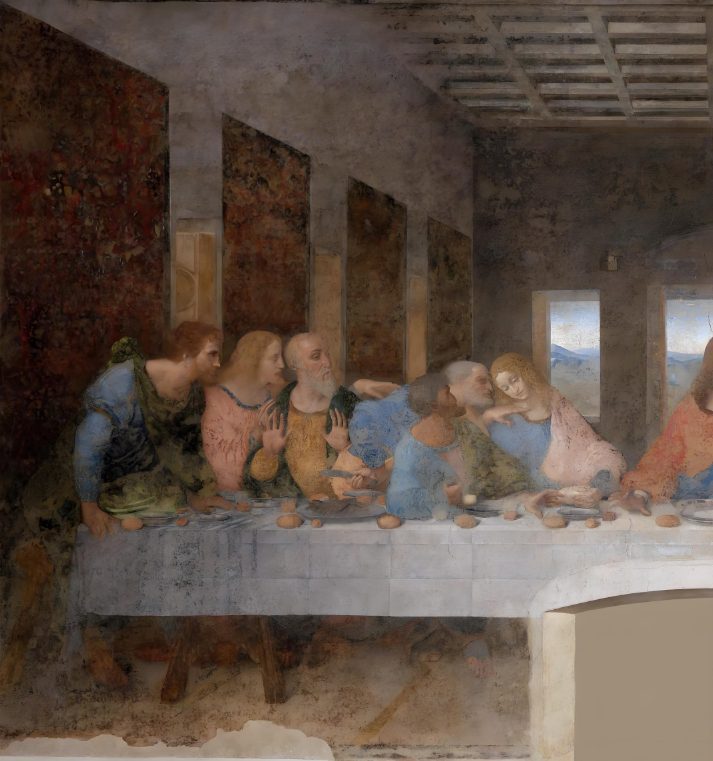
The Last Supper is not a traditional fresco, but rather an experimental dry technique used by Leonardo da Vinci: mixing egg tempera with oil and applying it to a dry plaster and chalk base. This method allowed him more time to depict details and lighting, but it was extremely fragile, and the work began to flake off shortly after its completion.
Historical Deterioration and Restoration
As early as 1517, records indicate that the painting had begun to deteriorate; by the mid-16th century, Vasari described it as “almost invisible.” In 1652, to open the monastery, the feet of Jesus were directly cut off. Early restorations primarily involved repainting, which obscured original details.
From 1977 to 1999, Pinin Brambilla Barcilon led a 22-year scientific restoration effort, removing as much of the overpainting as possible to preserve Leonardo da Vinci’s original brushstrokes and bring the painting closer to its original state.
Comparative work: “The Crucifixion”
Montorfano’s “The Crucifixion” was created using traditional fresco techniques and is in excellent condition, forming a stark contrast to da Vinci’s work. According to Vasari, da Vinci may have added portraits of members of the Sforza family below it. This juxtaposition transforms the dining hall into a visual narrative space depicting the entire story of Christ’s passion.
Essential information for visitors: Tickets and reservations
Due to the extreme fragility of the paintings, all visits must be booked in advance, including those for children and infants. All tickets are registered to specific individuals, so the name of each visitor must be provided at the time of purchase and ID must be presented upon entry. Name changes can be made up to 24 hours before the visit.
Reservation channels
- Online (officially authorized): cenacolovinciano.vivaticket.it (A maximum of 5 tickets can be booked twice per calendar year)
- Phone: +39 02 92800360 (maximum of 9 tickets per booking)
- Groups (10 or more people): cenacologruppi@adartem.it
Ticket Release Schedule
Tickets are released quarterly:
- September: Tickets for November–January of the following year are released
- December: Tickets for February–April go on sale
- March: Tickets for May–July go on sale
- June: Tickets for August–October go on sale
- Additionally, a limited number of extra tickets for the following week are released on the official website every Wednesday at 12:00 PM.
Ticket Prices
- Full-price ticket: €15 (25 years and older)
- Discounted ticket: €2 (18–25 years)
- Free: Under 18 years old
Opening Hours and Restrictions
- Tuesday to Sunday 8:15 AM–7:00 PM (last entry at 6:45 PM)
- Closed on Mondays and January 1, May 1, and December 25
- Maximum of 35 people per group, with each session lasting 15 minutes
- Entry requires passing through an air filtration chamber to control humidity and particulate matter
Transportation and Surrounding Area Recommendations
Public Transportation
- Subway: M1 (Red Line) to Conciliazione or Cadorna; M2 (Green Line) to Cadorna
- Tram: Line 16 to Santa Maria delle Grazie
- Bus: Lines 50 and 169 to Via Boccaccio
Driving
Driving in the center of Milan is not recommended due to traffic congestion, restricted traffic zones (LTZ), and parking difficulties. It is recommended to park outside the city and take the subway into town.
Nearby Attractions
- Santa Maria delle Grazie Church and Chiostro delle Rane (Frog Cloister): The church is home to The Last Supper and blends Gothic and Renaissance styles; the Frog Cloister is named after the frog sculptures on the fountain and offers a peaceful environment.
- Sforza Castle (Castello Sforzesco): A 15th-century defensive castle and palace, now a museum complex housing Michelangelo’s “Rondanini Pietà.”
- Milan Cathedral (Duomo di Milano): A Gothic architectural masterpiece and symbol of Milan, offering panoramic views of the city from its summit.
- Pinacoteca di Brera: One of Italy’s most important art galleries, housing masterpieces by Caravaggio, Raphael, and others.
- Chiesa di San Maurizio al Monastero Maggiore: Known as “Milan’s Sistine Chapel” for its exquisite Renaissance frescoes.
- Leonardo da Vinci National Museum of Science and Technology: Italy’s largest science and technology museum, exhibiting numerous models of da Vinci’s machines and interactive exhibits.
- Ambrosiana Gallery: A rich collection, including da Vinci’s precious manuscript, the “Atlantic Codex.”
- Basilica of Sant’Ambrogio: Built in the 4th century, it is one of Milan’s oldest churches, blending early Christian and Romanesque architectural styles.
Although the Milan Cathedral and the Brera Art Gallery are a bit farther away, they are easily accessible by public transportation and are essential stops on any cultural tour of Milan.
Artistic and Narrative Innovation
Da Vinci depicted the moment after Jesus said, “One of you will betray me,” dividing the twelve apostles into two groups of three on either side, creating a balanced and dynamic composition. He captured each person’s psychological reactions and body movements, filling the painting with emotional tension.
This emphasis on psychological portrayal and dynamic narrative was highly innovative at the time and had a profound influence on religious painting in subsequent generations. The Last Supper thus became one of the most replicated and studied works of art.
Frequently Asked Questions (FAQ)
Q: Can I purchase tickets online?
Yes, we recommend booking several months in advance, especially during peak tourist season.
Q: When is the best time to visit?
Mornings and weekdays are less crowded, providing a better viewing experience.
Q: Can I purchase tickets on site?
It is almost impossible, as tickets are usually sold out in advance.
Q: How long does the visit take?
Only 15 minutes, and you must arrive on time.
The Last Supper is not only an eternal masterpiece in art history, but also a testament to the intertwining of architectural, religious, and political history. Its preservation depends on meticulous protection and strict visitor management. Planning your trip in advance and following the rules is not only for your own smooth visit, but also a sign of respect for this artistic treasure that spans five centuries.