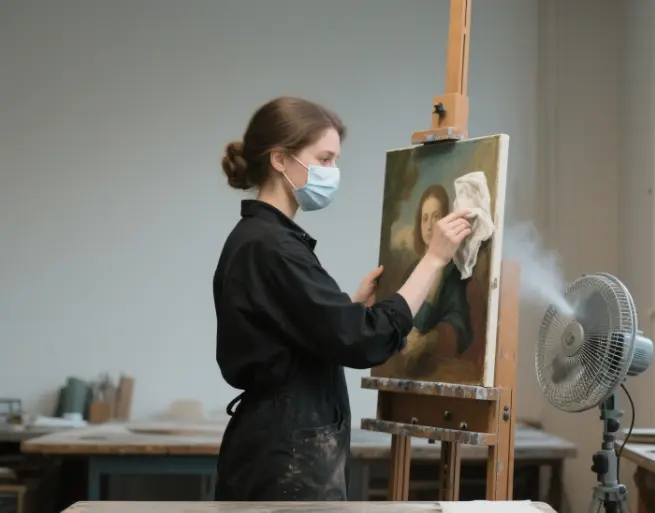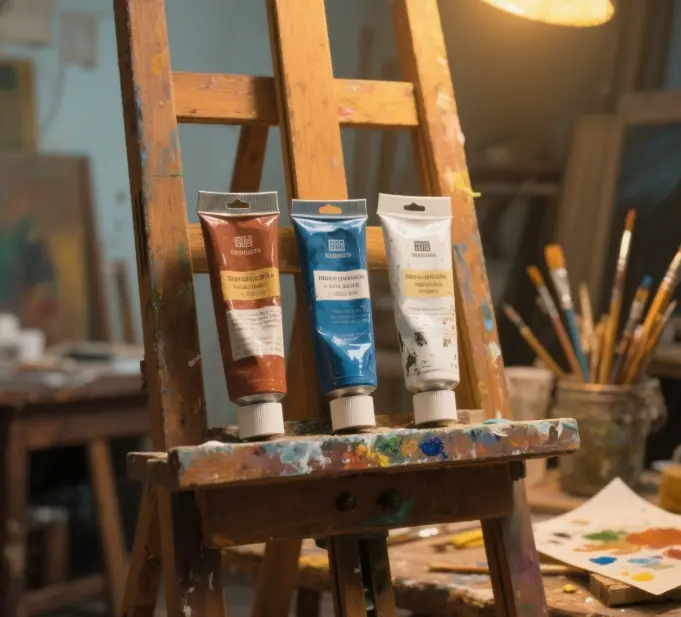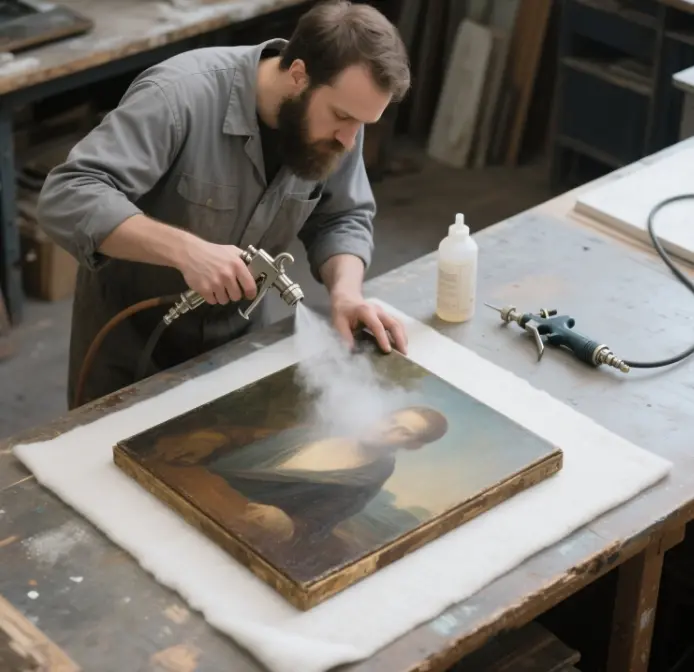
If you want to really distinguish between oil and acrylic, you must first understand the fundamental difference between their “film-forming mechanisms”. Oil painting encases pigment particles in dry oils, such as linseed oil and walnut oil, which dry through the polymerization of the oils with oxygen in the air—a slow process accompanied by a slight expansion in volume. So oils undergo a long softening period before curing, and any new layer of color will naturally merge with the old layer in a “wet-on-wet” fashion. Acrylic is the complete opposite: it relies on water evaporation to make the water-based resin polymerize with minimal shrinkage, and once dry, it becomes hard and resistant to further penetration. Because of this one slow and one fast, one expansion and one contraction, the two materials in the form of brushstrokes, color levels and post-maintenance show a very different “rhythm of life”: oil painting is like slowly fermented wine, the more it ages, the more it tastes; acrylics are more like instant coffee, the aroma is bright and sharp, but it will not continue to change.
Understanding the Basics: What are Oil and Acrylic Paints?
What are the main characteristics of oil paint?
The most prominent characteristic of oil color is its “slow” nature. A thin layer of color in the ventilation room must be left to dry for a day or two, and a large area of thick paint may even take a whole week to “table dry”. This calm allows the painter to have plenty of room for manoeuvre in the creation: if the dark part looks dull, at any time you can use a dry brush to sweep away the oil, and then take advantage of the “half-dry” state to press on a layer of cold grey; if the character highlights need a softer transition, you can directly in the next day, the light color of the wet brush into the old layer, so that the two color grades like cream to push each other melt. In addition, oil rich in fat, with a high refractive index and color particles wrapped in it, will present a deep and warm “body color” – even the purity of the cadmium red – but also with a hint of humble, dark brown undertones, unlike fluorescent paint, which is harsh. Multiple layers of sheer overdye also allow each layer of color temperature to be interconnected: the warm ochre of the base layer passes through the cooler powder of the top layer, bringing a true blood pulsation to the complexion. This “inside-out” thickness is difficult to achieve with any water-based medium.
What are the main characteristics of acrylic paint?
Introduced in the mid-20th century, acrylic is essentially a water-based acrylic resin. It dries very quickly – a thin coat can be applied in ten minutes in the summer, and a “table dry” in half an hour in the winter. For the commercial illustrator or street muralist, this means being ready to iterate, varnish or frame without worrying about colors dragging. Acrylic drying resin film is waterproof and weatherproof, and can be hung directly on damp walls without mold or discoloration. At the same time, it is very adhesive, allowing glass, metal, plastic, and wood to be directly coated with color, which cannot be achieved with oil paintings. However, once the resin film is shaped like a cell phone shell, the subsequent color can only “stick” on it; it is impossible to produce a real chemical fusion with the underlying layer. Although fast, layers of coverage also tend to flatten the color relationship, lacking the oil painting-like layer-to-layer breathing sense.

Visual Clues: How Can You Identify the Type of Paint by Looking?
What does the texture of the paint reveal?
First, examine the thick coating – oil painting, due to slow drying, the pen knife will leave rounded peaks and valleys. A few hours after these “hills”, the edge is still slowly sinking and eventually settles into a soft undulation, like butter when the temperature is gently rising. Acrylic thick pile exhibits “fast solidification”: the edge of the knife mark will immediately become sharp and straight. After drying, skin shrinkage often appears as fine cracks, resembling dry mud. Then look at the thin paint-oil on canvas. Because the oil penetrates the fibers, there will be a slight “oil halo.” Acrylic is like paint; a brush is ready, and the edge is clean and sharp, with no dip halo. Just by looking at the picture in the light, the two textures are obvious.
How can color saturation help in identification?
The oil of the oil color has a refractive effect on the light, so that the color particles appear thick, warm, even if the artist used a very bright cadmium yellow, but also with a little soft creamy light; layer after layer of cover dyeing, the underlying color can still be transmitted, so that the visual depth has increased dramatically. Acrylic does not contain oil; the color is “floating” on the surface, with a saturated white base, and color coverage is very strong. If you see a piece of blue as bright as a plastic block without any underlying layer showing through, it is most likely acrylic. If there seems to be a hint of deep purple or warm gray in the dark blue, it is usually the result of oil overdye.
What about the finish—does it indicate oil or acrylic?
Oil painting is mostly warm and matte after drying. The light is “eaten” by the oil film and then softly bounced out. Over the years, localized oil seepage forms speckled, micro-bright spots. Acrylic if you do not add a matte agent, comes with a high gloss, the light will appear clear reflections; even if you add a matte agent, the surface is adjusted to “frosted”, you can still feel a “plastic skin” hardness, rather than the kind of oil paint with the oily soft light.
Physical Examination: What Should You Feel for?
How does the weight and thickness of the painting help in identification?
Oil paintings are usually matched with linen or sturdy wooden frames, the canvas itself is heavy, coupled with the drying of the oil layer the more “polyester”, the overall feel of the heavy; the same size with the same subject matter of acrylics, if thinly coated is significantly lighter, thicker coated or add gravel will be close to the weight of the oil painting. If you weigh the painting vertically, you can often feel the “ripe and heavy” pressure that the oil painting exerts.
What does the surface feel like—does it feel smooth or rough?
The peaks and valleys of thick paintings are soft to the touch, as if they were solidified lumps of cream; thinly painted areas also leave a slight oily resistance. Acrylic dries to a hard plastic; thicker areas feel like hardened foam board with sharp edges; thinner areas are slippery and almost imperceptible to oily friction.
Can you identify the type of paint by the way it responds to touch?
Gently touch the corner with a wet cotton swab (do not experiment on masterpieces). The acrylic will completely repel water, and the color will not move. Oil paintings that are not completely dry or improperly varnished may appear to have a slight white haze or be slightly sticky after the water evaporates. Professional restoration often uses this point to determine whether the picture is completely hardened.
Smell and Chemical Properties: Do They Matter?
What scents can you detect, and what do they indicate?
New oil paintings often have a pungent wood flavor mixed with turpentine and linseed oil, and the evaporation period can be up to a few months. In contrast, acrylics only have a light gum flavor, which dissipates a few days later, making it almost undetectable. When you visit the exhibition, if you enter the hall and smell the smell of “furniture paint”, it is likely that the wall is hung with recently completed or just restored oil paintings.
How does the chemical composition of oil and acrylic paints differ?
Oil paintings require dilution with solvents and washing during the creation stage, which involves high concentrations of VOCs. They rely on continuous ventilation. The dried oil layer is chemically stable, but it is susceptible to drying and cracking at high temperatures, as well as to mold and mildew at high humidity. Acrylic has almost no volatile solvents and can be washed in water. However, the plastic film formed after drying is susceptible to scratches from sharp and hard objects, and should not be folded at temperatures below -20°C, as it may become brittle and crack.
Historical Context: How Can Age Influence Identification?
If the work is signed earlier than 1950, it is almost certainly an oil painting, since acrylic was not yet commercially available. After the war, a large number of abstract and pop artists began to use acrylic as their primary medium: Warhol’s silk-screen portraits and Harlem’s street graffiti all used quick-drying acrylics, while Freud and Bacon continued to insist on oils during the same period. Understanding the author’s age and the context in which they created their work allows us to minimize errors in judging the material.
Expert Tips: What Should You Do if You’re Uncertain?
The peaks and valleys of thick paintings are soft to the touch, as if they were solidified lumps of cream; thinly painted areas also leave a slight oily resistance. Acrylic dries to a hard plastic; thicker areas feel like hardened foam board with sharp edges; thinner areas are slippery and almost imperceptible to oily friction.
Conclusion: Why is It Important to Know the Difference?
Gently touch the corner with a wet cotton swab (do not experiment on masterpieces). The acrylic will completely repel water, and the color will not move. Oil paintings that are not completely dry or improperly varnished may appear to have a slight white haze or be slightly sticky after the water evaporates. Professional restoration often uses this point to determine whether the picture is completely hardened.